Various dates in Jan, Feb, & Mar: A Garden Primer

Don't know the first thing about vegetable gardening? Never even picked up a spade? Fear not - A Garden Primer will cover all the basics, including which tools beginner gardeners will need, what and where to plant, and when to harvest. In addition, those taking part in the course will be given step-by-step instruction on everything from starting a compost to properly transplanting seedlings. Whether working with a spacious backyard or an apartment balcony, participants will receive specialized advice and guidance to get their vegetable gardens going whatever the space.

Classes will run from 7 to 9 p.m. in the McKelvy Room of the East Liberty Presbyterian Church. Snacks will be provided by Panera.  Cost is $50 for Grow Pittsburgh members, $60 for the general public (
Please select the month you wish to participate in carefully as we are not able to accommodate transfers to different classes or refunds due to complicated logistics).  The three-part course will be offered three times early in the year:
Thursdays:  January 10, 17, and 24
Tuesdays:  February 12, 19, and 26
 Mondays:  March 11, 28, and 25

For more information and to register online, visit http://www.growpittsburgh.org/garden-primer-2013/ 

Jan 10: Living buildings in Seattle & Pittsburgh


iss logo
The Green Building Alliance's INSPIRE speaker series brings a whole raft of green building luminaries in January.  


5:30-8:30 p.m. at Phipps Conservatory & Botanical Gardens.  For more information and to register online, go here.  Cost:  GBA or partner organization member: $25;  non-member $45.  For group rates and scholarship information, please contact Jenna Cramer.  

Chris HellstromChris Hellstern | M. Arch. | NCARB | LEED® AP BD+C | CDTholds a Masters of Architecture degree from Texas Tech University. His thesis work focused on designing a sustainable elementary school in Seattle that allowed both students and faculty to experience the building’s many environmental features through education and practice.
An Associate with KMD Architects in Seattle, Chris has been with KMD over six years working on a variety of building types and LEED projects. Those projects include hospitals, justice, offices and master planning. His most recent project involved the design and construction administration of a pro-bono Seattle project for the Bertschi School that is aimed to achieve The Living Building Challenge v2.0.
Chris serves as a Cascadia Green Building Council Branch member and a Living Building Ambassador for the International Living Future Institute. He also co-founded the Restorative Design Collective and KMD’s Sustainability Committee working to increase the company’s commitment to the environment through their work and practice. He founded the Seattle 2030 Roundtable, which works with local architects to achieve the 2030 Challenge, and was appointed as the first Regional Chair of Washington and Alaska for USGBC Students. Chris has been a speaker at numerous environmental conferences and also volunteers with local school groups, mentoring high school students about sustainable practices.
Before his career in architecture, he spent many years in Alaska serving as a Certified Level III Alaska Naturalist leading outback kayak trips.
Stacy SmedleyStacy Smedley, Executive Director+Chief Enrichment Officer
Membership Chair – Cascadia Green Building Council Seattle Branch, National Emerging Professionals Recruitment Chair –United States Green Building Council, Member – University of Washington Department of Architecture Professional Advisory Council, Mentor – various elementary and high school sustainability programs, LEED BD+C

Stacy has a Bachelor of Arts in Architecture from the University of Washington, and 10 years in the architecture profession. Her resume includes the first LEED for Homes Platinum certified project in Washington State as well as the first project built to Living Building Version 2.0 standards, an elementary school science building in Seattle. As an Associate at KMD Architects, Stacy helped found the firms internal Sustainability Steering Committee and continues to affect change within the firm, to increase their commitment to sustainable practices on all of their projects and initiatives. Her inspiration stems from watching her rural childhood family plot of land be encroached upon and eventually turned into a suburban subdivision of asphalt cul-de-sacs and poorly constructed cookie-cutter homes. She told her mom when she was 8 years old that one day she would design buildings that didn’t cut down trees, and that is what she continues to work for today.
mark BuehrerMark Buehrer
Mark is the founder and director of 2020 ENGINEERING located in Bellingham, Washington. He is a registered professional civil engineer, author, and inventor with broad experience in engineering design, construction and project management. Since 1995, 2020 ENGINEERING has been dedicated to providing simple and innovative solutions for the long-term economic and environmental sustainability of local, national and international communities.
Mark conceived and developed the concept of Wholistic Engineering, which provides an integrated "problem solving" approach that considers all issues and possible conditions related to the development of a project, such as: laws & regulations, social concerns, politics, special interests, economic & environmental issues, technology, and resources. 2020’s sustainable and low impact designs include porous pavements and raingardens, rainwater harvesting systems, ecologically based wastewater treatment & water reuse systems, and material recycling and composting facilities.
Mark has provided Master Planning, Engineering Design and/or Construction Management assistance on dozens of LEED, LID and other sustainable type projects in many parts of the U.S.A. He has also been actively involved in 2008 with providing review and comments to codes and standards for sustainable building practices. This has included a white paper by Cascadia Region Green Building Council titled, "Code Barriers to the Living Building Challenge"; Rainwater Harvesting and Water Reuse draft codes for the Uniform Plumbing Code (UPC) and the International Association of Plumbing and Mechanical Officials (IAPMO), and the co-authored document "Rainwater Catchment Design and Installation Standards" by the American Rainwater Catchment Systems Association (ARCSA) and the American Society of Plumbing Engineers (ASPE).
Mark has served on the Cascadia Region Green Building Council as a technical development member on the "Site Team" and "Water Team" for the development of The Living Building User's Guide, the continued development of The Living Building Challenge standard and as an instructor of the Living Building Leader certification sessions. Mark is a frequent speaker at various sustainable and LID conference and workshops including, most recently, the 2008 Living Future Unconference in Vancouver, BC and the 2008 American Rainwater Catchment Systems Association (ARCSA) conference held in Santa Monica, CA. Mark is a registered professional civil engineer in Washington, Oregon, Alaska, Hawaii and other states. He has over 26 years of Civil Engineering experience.
Richard PiacentiniRichard V. Piacentini Richard V. Piacentini, executive director of Phipps Conservatory and Botanical Gardens since 1994, is responsible for the construction of the first LEED® certified visitor center in a public garden, the most energy-efficient conservatory in the world, the first-ever LEED production greenhouses, and the Center for Sustainable Landscapes, a net-zero energy and water structure designed to meet the Living Building Challenge. Piacentini believes that beautiful gardens can be environmentally friendly, and, with that in mind, Phipps has transformed its operations, displays, flower shows and education programs to reduce waste, save energy and inspire the public with sustainable horticulture and landscaping. Piacentini holds a M.S. in botany from the University of Connecticut, a M.B.A. from Virginia Commonwealth University, and a B.S. in pharmacy from the University of Rhode Island. He is past president and treasurer of the American Public Gardens Association and a recipient of its Professional and Service Awards. Other accolades include a Living Building Challenge Hero Award, USGBC Individual Leadership Award, American Horticultural Society Award, and ASID and Green Building Alliance Leadership Awards.
About the Bertschi School (an elementary school in Seattle): Inspired by the Living Building Challenge and opportunities to apply it to an educational setting, design professionals formed the Restorative Design Collective in order to provide the design and pre-construction services pro brono for the Bertschi School’s Living Science Classroom. The process was non-traditional and highly collaborative in order to design and build a school that not only achieved net-zero energy and water usage, but also serves as an engaging teaching tool for the students. The students contributed to the design process, and brainstormed some of the building’s most unique features. One of these includes a river that runs through a channel in the concrete floor, showing the building’s rainwater harvesting system. The living classroom enhances the school’s sustainability initiatives, programs, and education. Three of the project team members, Stacy Smedley, Chris Hellstern, and Mark Buehrer, will present about this unique and inspiring project. Learn more.
About the CSL: Designed and built by citizens of Pittsburgh and Pennsylvania, the Center for Sustainable Landscapes (CSL)—a dynamic new education, research and administrative facility opening soon at Phipps public garden —has emerged as one of the greenest buildings on Earth. In aiming to meet or exceed the highest standards for sustainable buildings and sites—including, the Living Building Challenge, LEED® Platinum and SITES™—it will generate all of its own energy with state-of-the art technologies such as solar photovoltaics, geothermal wells and a vertical axis wind turbine; treat and reuse all water captured on site; and feature a restorative landscape with many beautiful varieties of native plants. Richard Piacentini, Phipps executive director, will share the CSL story. Discover more at phippsCSL.org.

Jan 7: Sustainable Monroeville on Marcellus


The monthly meeting of Sustainable Monroeville will include a gift circle, a discussion of the newly-released movie Promised Land, and a visit from Wanda Guthrie of the Murrysville Marcellus Community Group. 

7 p.m. at the Monroeville Public Library, free and open to the public.

Jan 7: Fight Back Pittsburgh! inaugural meeting


Inaugural Meeting of Fight Back PittsburghFight Back Pittsburgh! is the Associate Member program of United Steelworkers Local 3657.
Working class people in Pittsburgh are under attack! We’re facing high unemployment, low wages and poor working conditions, and cuts to essential public services like transit and education. Meanwhile a handful of big companies are getting rich by driving down wages for workers and not paying their fair share of taxes.

Decades ago the Steelworkers fought to win good, family sustaining jobs in Pittsburgh and to create social services to give us all a fair shot at success. We created a decent standard of living for working class people in Pittsburgh once, and together we can do it again.

Fight Back Pittsburgh! is the community union of United Steelworkers Local 3657. We’re not just fighting for good jobs for Steelworkers; we’re fighting for a better community for all of us. But we need you to join us.

You don’t have to work in a steel mill to join Fight Back Pittsburgh. You just need to believe that we need an economy that works for all of us and that together we can stand up and fight back to win a fair deal for working people in our community.

Fight Back Pittsburgh is part of the United Steelworkers Associate Member Program and we work a lot like a local union. We’re a grassroots, democratic organization that works together to fight in our neighborhoods, in our local government, and in our workplaces for change and to improve our lives. We meet monthly, we’re funded by small dues contributions paid by our members, and we take action based on the ideas and proposals of rank-and-file members like you.

6:30 at United Steelworkers Headquarters, 5 Gateway Center, 15222 (downtown).  You can see the agenda and RSVP via Facebook, If you can't make it in person, the meeting will be live-streamed online here.

Jan 4-5: Community Rights Workshop


Not to be missed by those who are committed to community empowerment for a sustainable future!  

6-9 p.m. on Friday, Jan 4 and 9 a.m. to 6 p.m. on Saturday, Jan 5 at the Friends Meeting House (4836 Ellsworth Avenue in Oakland)  Cost per person is $50 (but no one will be turned away for inability to pay).  Space is limited to 35 maximum;  sign up early, and please share this with people you know who would find this really useful.  Registration information:  http://environmentaljusticetmc.blogspot.com

Wondering why corporations have more power than those of us living in our community?  Wondering why Harrisburg licenses and permits corporations to harm our community?  Wondering why Harrisburg routinely prevents us from making decisions that are in the best interests of our community?

The Pennsylvania Community Rights Workshop takes an in-depth look at how Pennsylvania's political and legal structures have been set up to protect the interests of an elite minority, at the expense of the majority of Pennsylvanians.  We'll look at how Pennsylvania's constitution has continually evolved since the American Revolution to protect wealth and privilege over community self-government.  We'll look at how corporations in Pennsylvania have received more rights and protections than those of us living in our community, and we'll look at how Pennsylvanians have pushed back against these oppressive structures to reclaim democracy in their communities.

Finally, we'll consider what it would take to create a Pennsylvania constitution that protects the rights of people, communities, and nature by securing our inalienable right to local self-government, free from corporate and state interference.

Dec 21: Green Drinks at Marty's Market

Come out to Marty's Market For Some Holiday Cheer and Treats 


Host Regina Koetters is driven to unleash the unrealized potential of the nation's riverfront Rust Belt cities through regionally significant development projects and investments in infrastructure.  She chose Pittsburgh over every other city in the nation to begin her work in 2008, with a vision of becoming a true greengrocer.  A native of Louisville, KY, Regina was commissioned as an officer in the US Navy upon graduation from the United States Naval Academy with a B.S. in Naval Architecture.  In 2007, she transitioned to the US Navy Reserves and completed her masters studies in business and progressive real estate development at the University of Michigan.  Since relocating to Pittburgh, she has championed several initiatives for sustainable development projects in downtown Pittsburgh, augmented a public-private team endeavoring to bring passenger rail service to the Allegheny Riverfront, and most recently, she launched Marty's Market, a unique food market, cafe and coffeehouse in the Strip District dedicated to strengthening the southwestern Pennsylvania food system.  She serves as a member of the Design Center's board and a Pittsburgh-baed Navy Reserve unit.
5:30-8:30 pm at Marty's Market (2301 Smallman Street,  Pittsburgh, PA 15222) (small bites and wine will be provided).  Directions 

Marty's Market opened in July 2012 and connects Pittsburghers who demand fresh, full-flavor, high quality food with regional farmers who are committed to growing it.  The market is a destination store, a meeting place and special event venue.  Featured at Marty's are GMO-free produce, clean all-natural pantry stateless including an extensive assortment of gluten-free foods, and a full-service butchery stocked with locally-sourced all-natural pork, grass-fed beef, lam and poultry along with an array of cheeses, house made charcuterie and fermented foods.  The cafe features housemade pastas, pastries and flavorful foods made from the bounty of the market's all natural produce, meats and cheese, while the coffeebar serves thoughtfully-sourced direct trade, single origin coffees and locally blended loose leaf teas.
Pittsburgh Green Drinks

What is Green Drinks? Every month, people who work in the environmental field or have an interest in a greener planet meet up for drinks all around the world at informal sessions known as Green Drinks. We have a lively mixture of people from NGO's, academia, government and business. Come along and you'll be made welcome. Just say,"are you Green?' and we will look after you and introduce you to whoever is there. It's a great way of catching up with people you know and also for making some new contacts. Everyone invites someone else along, so there is always a different crowd, making Green Drinks an organic, self-organizing network.

These events are simple and unstructured.  Make friends, develop new ideas, do deals and forge a new organic future. It's a force for the good and we' like to help it spreading to other cities.  Green Drinks meets on the third Friday of the month.  Put it on your calendar and count on it: Green Drinks is happening every month.

Email us at pittsburghgreendrinks@gmail.com with questions, comments. 

 Pittsburgh Green Drinks Data Sheet
WHAT: The world-famous Green Drinks
WHEN: Third Friday of the month, 5:00-9:00 pm
STATUS: Informal, self-organizing network
GLOBAL: Now active in 812 cities worldwide. Every month globally since 1989, locally since 2005. 
Average attendance: 90
WHERE: Rotating venues in Pittsburgh
HOW: Walk, cycle, bus, boat, taxi or drive
WHO: Anyone working on environmental issues 
or who wants to!
WHY: Fun, contacts, alcohol (or not), info, gossip, inspiration, business and pleasure
NEW: Just go up to someone and say "are you green?", and you'll be made welcome.
 www.greendrinks.org/PA/Pittsburgh

Join the Green Drinks Email List

Dec 13: David Orr at Phipps

Inspire Speaker Series David Orr
Thinking Big:  Interdisciplinary Sustainability Learning.  The Green Building Alliance and Phipps Conservatory present David Orr for the next talk in the INSPIRE speaker series.


"The plain fact is that the planet does not need more successful people. But it does desperately need more peacemakers, healers, restorers, storytellers, and lovers of every kind. It needs people who live well in their places. It needs people of moral courage willing to join the fight to make the world habitable and humane. And these qualities have little to do with success as we have defined it." David Orr, Earth in Mind

J
oin us for the third session of the INSPIRE Speakers Series with national expert David Orr, a scholar, teacher, writer, speaker, and entrepreneur who spans fields as diverse as environment and politics, environmental education, campus greening, green building, ecological design, and climate change!GBA and Phipps Conservatory are excited to host David Orr to speak about the value of integrating sustainability across the curriculum and engaging students with their local communities. As David explains in his book Ecological Literacy, the words "environmental education" imply education about the environment, often in a separate course or two within formal school settings.  However, all education is environmental education due to the interconnectedness of all things, and thus of all academic disciplines. To be effective, education must reflect the ecological patterns that connect us all, and not be confined to separate subject areas or within the walls of our formal school settings.In this inspirational talk, David will discuss the following concepts from his book, Ecological Literacy:
  • The value of engaging the wider society in education;

  • The roles of nongovernmental organizations, schools, colleges, universities as catalysts to a wider transformation of the culture and society;

  • The importance of the educational environment, campus, and curriculum as reflections of ecological values and realities; and

  • The goal of ecological literacy as the active cultivation of ecological intelligence, imagination, and competence.
5:30-8:30 p.m. at Phipps Conservatory & Botanical Gardens.  For more information and to register online, go here.  Cost:  GBA or partner organization member: $25;  non-member $45.  For group rates and scholarship information, please contact Jenna Cramer.  For the December lecture only, guests of the Inspire Speakers Series will have a chance to exploreCandlelight Evenings at Phipps! After you hear our amazing lecture from David Orr, stroll around the halls of Phipps and be enchanted by the Winter Flower Show & Winter Light Garden. You’ll be surrounded by live music, twinkling lights, and beautiful flowers! What better way to spend a cold winter evening? Phipps will remain open until 10 p.m. Don’t miss your opportunity to hear an amazing speaker and enjoy this special treat, all for one low price!


Dec 10: YERT online DVD release party


i_yert.jpgThe team from "YERT - Your Environmental Road Trip," (YERT.com) is celebrating the release of their award-winning eco-docu-comedy feature film DVD with distributor First Run Features, by hosting a live videochat party online at http://www.yert.com/DVDLaunchParty.php - broadcast via YouTube for anybody to watch around the world - on 12/10/12 at 9:00pm - midnight EST. Filmmakers Mark and Ben will be bringing on several guests, including Solar Roadways founder Scott Brusaw, not to mention and YERTmom Julie Evans, and even YERTbaby Bailey - who was conceived during the road trip! You are also encouraged to submit news stories or questions you'd like them to address live during the show - with the most awesome submitters getting invitations to join the live show. Find all this info and more, including a pre-party teaser video, at http://www.yert.com/DVDLaunchParty.php 


Dec 8: Woodlands water supply fundraiser

Holiday Fundraiser, "Water for Woodlands" (drinking water for the Connoquenessing families who have lost their potable water to fracking). $15 adults, $5 ages 6-12, under 6 free. Lasagna dinner, music, movies, silent auction, kids crafts.  If you can't make it, donations will be gratefully accepted.

4:30-8 at the Lutherlyn Campground, 500 Lutherlyn Lane, Prospect, PA 16052.   RSVP to mpro113@gmail.com Marcellus Outreach Butler. 

Dec 8: Indoor Holiday Market


Elizabeth Donohoe will be hosting a Holiday Indoor Market at her home in Forest Hills.  Some very fine beekeepers, farmers, bakers, tea blenders and others will join her for an off-season gathering of the best of the wonders from the farm and garden.  Gifts for the coming holidays will be in great supply!

**Honey infusions, honey, bee-based skincare products;
**Late-season farm produce, fresh eggs;
**Local pastured chicken, beef and pork;
**Specialty Tea blends;
**Vegan baked goods;
**Wild-yeast breads, sourdoughs;
**Natural skin and haircare from the garden;
**Goat milk soaps and natural dog biscuits;
**Dried hot pepper garlands.

Also, if you have some gently used (or new) tote bags to spare, we'll be collecting them for the Pittsburgh Tote Bag Project, a Greater Pgh. Food Bank partner.

2-5 p.m. at 220 Overdale Road in Forest Hills.

Dec 7: Woman to Woman workshop


HeatherRetberg
Woman to Woman:  Pay It Forward 

The Pennsylvania Women's Agricultural Network at Penn State University (PA-WAgN) hosts a one-day networking symposium for new and beginning farmers, aspiring farmers, woman farmers, home gardeners/homesteaders, informed consumers, and seasoned farmers interested in diversifying their farm operations. Through peer-to-peer education and idea sharing this event supports women in farming with lessons gained through experience. "Woman to Woman: Pay It Forward" delivers presentations, workshops, panel discussions, and networking sessions that are guaranteed to amplify your passion for farming.

8 a.m. to 5 p.m. at the Penn Stater Conference Center in State College, PA (Centre County);  $50 registration.  Lots more information here. 


Dec 3: Urban-Suburban connection (and radio Nov 30)

Join Sustainable Monroeville on Monday evening, December 3, 2012, at the Monroeville Public Library for a vegan and vegetarian pot luck dinner at 6:00 PM followed by a discussion about linking the Urban and Suburban Food Not Lawns Movement to the Urban core through the Schwartz Living Market project in Pittsburgh's Historic South Side. We'll discuss Monroeville Food Garden planning for 2013 and other possible projects for the upcoming year too. How exciting! 

This is your personal invitation to engage directly in the dialogue and see an urban Transiiton Town project in action this coming Saturday, that's tomorrow from 9 Am to 5 PM in Pittsburgh's Historic South Side at 1317 East Carson Street.  I hope to see you tomorrow in South Side and Monday evening in Monroeville!

BTW, listen to Essential Pittsburgh , 90.5 FM, today between noon & 1 p.m. (or 8 & 9 p.m.) to hear an update about the South Side project, what is the Living Building Challenge, and moving forward in the green economy. You can bet Elisa will be mentioning Sustainable Monroeville, the story behind the South Side process!

Go to www.sustainablemonroeville.com for the most recent blog entry about our meeting and more!

Dec 1: Health Care Sustainability Salon & Sing

Health Care and Sustainability:  Several speakers will share what they've been doing to improve how health care is done in this country -- from a sustainability point of view.  And as the Sustainability Salon & Sing series matures, it's great to see many of our featured speakers come from the ranks of regular participants -- we have a pretty interesting crowd!

Most directly, local physician Dr. Noe Copley Woods will talk about the waste endemic to current medical practice, and efforts to green it here and around the world (e.g. ).  We all know that the average American makes 4.5 pounds of trash per day. That all changes when a person gets sick. The average poundage per patient at Magee-Women's Hospital is 31 pounds of trash per day and growing. Dr Woods will discuss the environmental footprint of a hospital, what makes it so large, and what is being done to fix it.  Noe Copley Woods, MD, FACOG is assistant professor of ObGyn at UPMC, is on the boards of GreenHealth and Health Care Without Harm, and is a regular speaker at CleanMed, the national conference for leaders in health care sustainability.  She's also a semi-regular at our Salon/Sings, playing fiddle and mandolin.

Since we're also seeking sustainability as a society, folks from Health Care For All/PA will share what that organization is doing to improve access to health care.  Pittsburgh pediatrician Scott Tyson, executive director of HC4APA and member of Physicians for a National HealthPlan, will speak about  what it's like being a physician and a small business owner in the face of the current health care system.
Statistician and blogger Paul Ricci, a PhD student in research methodology at Pitt who also manages the HC4APA blog (and another Salon regular), will talk about how the US spends the most per capita on health care, but has poor health outcomes compared to the rest of the world -- not sustainable from a health or economic perspective.

And we'll talk about the connection between end-of-life choices and sustainability, with a musical dimension:  there are many differences (including environmental cost) between dying in a hospital hooked up to machines, and dying in hospice care surrounded by loved ones...  Cindy Harris, leader of the Pittsburgh Threshold Choir and Salon/Sing regular (on voice and autoharp), helps ease that process with bedside song.
Back in 2008, as discussions on the Affordable Care Act ramped up, we heard a lot about "death panels" -- imagined committees of faceless bureaucrats who would dispassionately refuse lifesaving care to critically ill seniors when the cost of care exceeded the individual's value to society. Of course no such thing was ever contemplated, but there has been continuing discussion about end of life care issues and many of us have had our physicians suggest that we consider completing the "Five Wishes" exercise to give our loved ones guidance on what kind of "drastic measures" we would like them to request on our behalf if we are incapacitated. The goal is sustainability, not only with respect to the cost of healthcare, but also with respect to the dignity of the individual and the family as the end of life approaches. The rapid growth of the hospice movement is a direct response to our society's increasing willingness to discuss and address these issues on a very personal basis. Cindy Harris will review some information about hospice care in Western PA and beyond, and will demonstrate the work that the Pittsburgh Threshold Choir is doing at the bedsides of hospice patients in Allegheny County.  

The order of talks will be the reverse of the above descriptions:  we'll aim to start the presentations at about 4 pm;  before that time folks are trickling in the door (please don't arrive before 3 pm), putting out food (snacks, dinner, and drinks are pot luck, including a bunch of things that we provide), and generally meeting & mingling.  We'll open with Cindy and the Threshold Choir, continue with speakers on health care access and politics, and end with Noe's talk on greening health care -- each segment will have time for Q&A, and I'm sure that discussion of all three topics will continue through dinner and into the evening (while more music happens in the living room, no doubt including health-care-related songs by local musician/activist Mike Stout and others).

On Saturday, December 1st, please join us for the eleventh Putting Down Roots Sustainability Salon, another in our ongoing series of monthly enviro-conversational gatherings with potluck food and homemade music.  Following our rousing discussions on air quality, solar power, food, trees and park stewardship, alternative energy and climate policy, and regional watershed issues, this month will focus on health care.   


And if you like to make music or listen to homemade music, don't forget the evening sing -- we typically run the gamut from Irish fiddle tunes to protest songs to the Beatles, and a fun time is had by all.  Bring instruments if you play, and/or pick up one of ours.  Conversations will continue through the evening as well. 
3-10 p.m. at Maren's house in Squirrel Hill.   Please email me to RSVP (important for yesses and maybes, even last-minute;  please do so each time -- it helps greatly in several ways.  Among other things, attendance varies from 25 to 75, and it helps to have a handle on numbers in advance!) and I'll send directions and/or a trail map if you need 'em.  Be sure to include "salon" in the Subject line, as I receive a ridiculous amount of email every day.  Bring food or drink to share if you can, along with musical instruments if you play.  Check back on MarensList (where you can find information on all sorts of environmental and social justice events), for updates.  And continuing my rare streak of advance planning, the next two months' Sustainability Salons will include a film screening and open discussion (so as to avoid worries about harsh weather) -- mark your calendar for January 5th and February 2nd. 
----------------------------
Quite a few people have asked me what sorts of food to bring -- and my answer, as always, is whatever inspires you;  I believe in the "luck" part of potlucks.  Tasty noshings for the afternoon, hearty main dishes or scrumptious salads and sides for dinner, baked goods from biscuits and breads to brownies or baklava -- and/or beverages of any kind.  The more the merrier!  Local fare is always particularly welcome, whether homegrown or boughten.  Dishes containing meat are fine, though if it isn't really obvious please make a note of it.  
----------------------------
-salon |səˈlän; saˈlô n |:  (historical) a regular social gathering of eminent people (esp. writers and artists) at the house of a woman prominent in high society;  a meeting of intellectuals or other eminent people at the invitation of a celebrity or socialite.
Regular, that's the plan.  Eminent and intellectual people, to be sure -- that's yinz.  House, check.  Woman, c'est moi.  High society, celebrity, socialite?  Not so much.  Salons occurred in 17th-century France, purportedly powering the Enlightenment, and were more recently repopularized by the Utne Reader.  I've long contemplated hosting an ongoing series of conversational salons in this tradition: informal gatherings around the notion of sustainability.  Some will have a featured guest to lead a discussion on a some topic, others will be open to whatever comes up.  If you'd like to hear about a particular topic, or hold forth on your own area of expertise, let's talk about a future event!

Dec 1: Navigate Frick Park

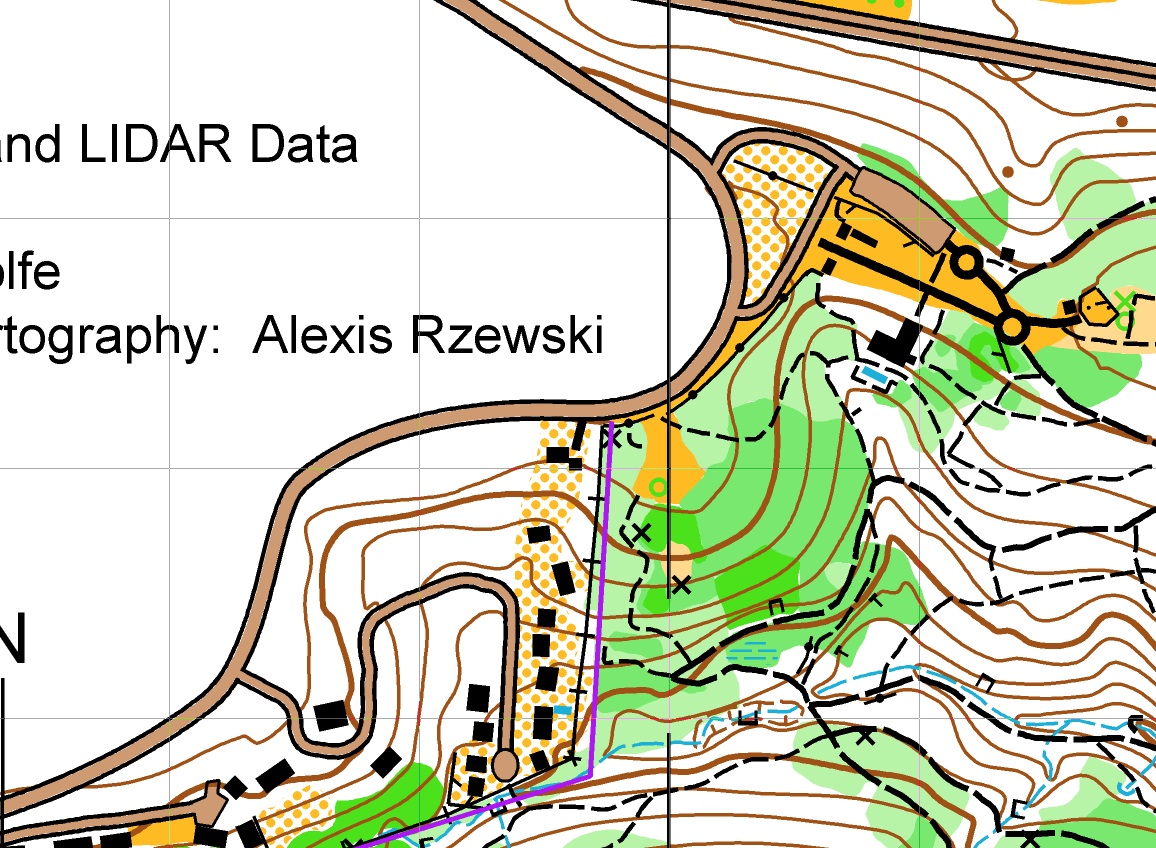
The Western Pennsylvania Orienteering Club is sponsoring a Map and Compass Land Navigation event in Frick Park, the best outdoor playground the city has to offer.  

What is Orienteering? It’s a competitive form of land navigation. It is for all ages and degrees of fitness and skill, and all-weather. It provides the suspense and excitement of a treasure hunt. The object of this activity is to locate and find control points sequentially by using only a topographic map and compass as navigational tool (no GPS).

What to bring? All you will need to bring is a compass (if you do not have one, we can loan you one) and appropriate footwear to walk in the woods.  The East End Food Co-op will be providing some snacks and beverages.

Event Details:  Four courses will be offered:  beginner, adv beginner, intermediate,  advanced.  Start anytime between 10 AM and 1 PM (there is no mass-start like in a running race – here the starts are “staggered”, each participant at least two minutes apart from each other). Come early if you plan to do more than one course.  Can start either as an individual or as a group/family.

  • Sign In any time between 10 a.m. and 1 p.m.;  must finish the course by 2:30 p.m. -- perfect timing to stroll over to Maren's house for the eleventh Sustainability Salon which begins at 3 p.m.  Instruction for novices will be available on site.  Cost:  $5.00 per map;  a group or family can do the event together with just one purchased map.  Event Location:  Frick Park, Pittsburgh.  Enter on east side of Park.  Go to the lower parking lot next to soccer field.  Look for the red-and-white arrow signs.  Questions?  Contact Jim Wolfe at jlwolfe@atlanticbb.net
Check our website, www.wpoc.org for complete details and driving directions for this event and the entire WPOC schedule of events.  And check out the group on Facebook


Nov 27: Climate talk by Larry Schweiger

Living in a New Climate Paradigm -- Welcome to the "Idiocene" featuring Larry Schweiger, president and CEO of the National Wildlife Federation, and former president of the Western Pennsylvania Conservancy.  He asserts that we have delayed climate action and are entering a period of climate consequences.  Environmental professionals and students (and everyone else) will soon be working and studying in a changed world.

6 p.m. in the Pappert Lecture Hall in the Bayer Learning Center at Duquesne University.  Free and open to the public; please rsvp by email.  Event sponsored by Duquesne's Center for Environmental Research & Education, celebrating 20 years of graduate education in environmental science and management.


Nov 23: Walmart protest

The local Pittsburgh Walmart protest event:
http://www.corporateactionnetwork.org/campaigns/black-friday/events/black-friday-at-walmart-5339

2:30 p.m. near the Waterworks Mall Walmart.
From Joy Sabl:  Wal-Mart's founder used to be a big proponent of Made-In-USA products.
Wal-Mart used to win out against competitors by having a lower profit margin and better, more innovative tracking and ordering processes.


Since Sam Walton stepped down, Wal-Mart flourishes in other ways. It has completely abandoned the "Made-In-USA" philosophy in pursuit of cheap goods. It undercuts competitors by paying its people less, and keeping them desperate and dependent by gaming their hours and using unfair scheduling practices that prevent them from taking a second part-time job.  It leeches off taxpayers by encouraging its workers to get on food stamps and other government assistance (note that their pay is so low that even full time workers often qualify for food stamps, making Wal-Mart the largest indirect recipient of food stamp dollars in the USA). Wal-Mart fails to provide a livable wage and decent healthcare benefits, reportedly costing U.S. taxpayers an annual average of $1.02 billion in healthcare costs alone. It offends fairness by contracting with shady companies to hire undocumented workers (because they have even less of a voice), by bribing officials (as documented in their Mexico stores, and under investigation internationally--video report here--and perhaps locally, in the USA) and reportedly by underpaying and/or underpromoting women in multiple regions (regional lawsuits now in process). They are now using vague but menacing threats to pressure workers out of striking. A calculation in the links above says that Wal-Mart would still turn a profit in the billions--without having to raise prices--even if they paid their workers several thousand dollars more, each year. As a privately held company, they do not have a presumed duty to their stockholders to make the maximum profit--the family owners could simply choose to be less greedy and pathological. 

As an American, as someone who lives on this landmass, or even as a world citizen being parasitized by this international company, this IS your fight. Come join your friends in speaking out. Our largest corporation should be an economic flagship, not a bottom-sucking parasite. 

Nov 20: Sustainability & Computing seminar

Silent Spring at 50: An Environmental Ethic for the 21st Century

Rachel Carson's book Silent Spring helped to shape the modern environmental movement. Reflecting on this initiative after 50 years provides insight into the changes we face today as we transition from a fossil based economy to one that can be sustained. I will discuss the forces that shape change, and present some guidelines for moving forward based on Rachel Carson's environmental ethic. We will explore the role of science and technology in shaping the future.

Your questions are much welcomed...


1:30 pm in Gates&Hillman 6115 on the CMU campus
http://calendar.cs.cmu.edu/scsEvents/demo/8212.html

About the Speaker:
Patricia DeMarco is the Director of the Rachel Carson Institute in the School of Sustainability and the Environment at Chatham University. Patricia DeMarco became Director of the Rachel Carson Institute in January 2011, following a five year term as Executive Director of the Rachel Carson Homestead Association. She is a native of Pittsburgh, and received a Bachelor of Science and a Doctorate in Biology from the University of Pittsburgh.

She pursued a career in biochemical genetics research at Yale University and at Boston University School of Medicine with a focus on mutation mechanisms. Following her academic career, she dedicated five years to raising her two children in Connecticut, then she turned her attention to energy and environmental policy. She served the State of Connecticut as Executive Director of the Power Facilities Evaluation Council and as staff to the Governor of Connecticut on such issues as nuclear power plant safety, energy conservation, clean fuels technology and as liaison to the Connecticut Energy Advisory Board. She represented the Governor on the Wild and Scenic Rivers Task Force which succeeded in designating the West Branch of the Farmington River. She worked as the manager of resource development for the Connecticut Municipal Electric Energy Co-operative and, as a loaned executive, started up a technology development firm to commercialize declassified defense technology.

Patricia moved to Alaska in 1998 to take the position of President of the Anchorage Economic Development Corporation. While in Alaska, she served as a Commissioner of the Regulatory Commission of Alaska, with jurisdiction over all electric, gas, water, refuse utilities, and oil and gas pipelines. From 2002 to 2005, she served as Associate Dean for the College of Business and Public Policy at the University of Alaska Anchorage.

Nov 17: Marcellus Protest Frack Forum

In celebration of the second anniversary of Pittsburgh's trail-blazing ban on fracking being adopted -- which was due, in large part, to the grassroots activism that sprung forth from the newly-formed Marcellus Protest -- we are pleased to invite you to the first Marcellus Protest Frack Forum. 

When: Saturday, November 17th, 12:00 pm - 3:00 pm
Where: Friends Meeting House, 4836 Ellsworth Ave. Pittsburgh, 15213 (there's parking in adjacent lot)
Who: Anyone concerned about fracking – we welcome new folks looking to get involved!
What:
* We'll meet & strategize, have some fun & celebrate the ban, a victory in which Pittsburgh truly set an example for the world.
* We'll look at where we've been and where we are now.
* Discuss the movement's direction for the future.
* Share recent news & projects from groups around SWPA
* Look at what activists are doing around the country
* Learn how to combat the latest industry PR & efforts by some elected officials to overturn the ban on fracking.
* Frack Forum will be a potluck (please bring something to share).

As many of our communities are beginning to realize how clear and present the dangers from fracking really are, now is the time for all of us to come together, collaborate, and reignite the movement in our region.


Nov 14: Three Rivers Wet Weather Webinar


Webinar on Municipal Data Support: An Online Asset Information Tool for Municipal Sewer Systems

The 83 ALCOSAN customer municipalities have consent orders with the Allegheny County Health Department or the PA Department of Environmental Protection that include significant requirements for data collection and compliance reporting.

In response to this need, 3 Rivers Wet Weather developed the Municipal Data Support (MDS) Tool, an online shared resource that contains guidance documents, reporting templates and a regional interactive mapping tool called WebMap that allows municipalities to view the complex sewage collection system in a Google Map format.
By attending this free webinar, led by 3RWW director John Schombert, participants will see a demonstration of the resources available in the MDS Tool and learn how it can help them to comply with their consent orders and improve the operation and maintenance of their municipal sewer systems. The webinar will include an interactive overview of the MDS tool as well as time for questions and answers as to how the tool works.

12 noon - 1 p.m. online.  The event is free, sponsored by the Local Government Academy, but you must register in advance.  For more information and to register online, visit here.

Nov 10: Sustainability Salon & Sing: Air Quality

It's time for GASP's annual fall gathering -- this year in conjunction with Maren's monthly Sustainability Salon (by way of disclosure, I'm also on the board of GASP).  We'll have an update by GASP staff on the organization's doings over the past year in the realms of policy, advocacy, litigation, education, and science, making southwestern Pennsylvania a better place to breathe.  Featured speaker Neil Donahue will lead a discussion about atmospheric particles, and you'll be able to check out the new Bike Air Monitor (BAM) equipment developed by GASP (with funding from Google), as well as Carnegie Mellon's Mobile Air Quality Lab.
What is so special about particles? Tiny atmospheric particles have outsized effects.  Though particle concentrations are only a few parts per billion by mass in air, even when it is fairly polluted, particles can cause serious health effects and have substantial climate effects.  What's more, particles are a mashup of all sorts of stuff -- to the best of our knowledge most consist of quite a small core onto which all sorts of things condense like spray paint.  Some particles, maybe as many as half by number, have no core at all but rather form out of thin air via a process called nucleation.  All of this makes the problem of dealing with particles much more complex than dealing with simple primary pollutants (like sulfur dioxide or nitrogen dioxide), or even "complex" secondary pollutants like ozone.  Neil Donahue, (atmospheric chemist, CMU professor, BAM bicyclist, director of the Center for Atmospheric Particle Studies, and your friendly co-host) will guide a conversation about what all this means -- to human health, to climate, and to what we can (or cannot) do about it.  


What is the air like in your neighborhood? One way to define Pittsburgh is through its variability. There are hills and valleys (with another hill past this valley and another valley past that hill), legions of distinctive neighborhoods, and, of course, sometimes unpredictable weather. We can add concentrations of air pollutants to the list, because the variability in land use, elevation (hilltop versus valley), and the distribution of pollutant sources lead to significant heterogeneity in pollutant concentrations in the city and region. One way to approach this variability is to conduct sampling in a variety of different locations in a relatively short amount of time. This is exactly what's being done by CAPS, using a specially-outfitted van as a mobile sampling unit.  CMU research professor Albert Presto will show you around the new Mobile Air Quality Laboratory and talk about the work it's been doing in the region, ranging from investigating emissions of Air Force refueling jets to monitoring Marcellus drilling sites (the image below shows a flaring well in the background).  He will lead tours of the mobile lab, and talk about on some of its early findings about the variability of different air pollutants in Pittsburgh.

On Saturday, November 10th, please join us for the tenth Putting Down Roots Sustainability Salon, another in our ongoing series of monthly enviro-conversational gatherings with potluck food and homemade music.  Following our rousing discussions on solar power, food, trees and park stewardship, alternative energy and climate policy, and regional watershed issues, this month will focus on air quality.  Check back here as the event approaches to learn about other speakers that will join us as they are confirmed.   


And if you like to make music or listen to homemade music, don't forget the evening sing -- we typically run the gamut from Irish fiddle tunes to protest songs to the Beatles, and a fun time is had by all.  Bring instruments if you play, and/or pick up one of ours.  Conversations will continue through the evening as well.  If you're itching for some music in the meantime, we're also hosting a house concert on November 3rd;  more info here.


3-10 p.m. at Maren's house in Squirrel Hill.   Please email me to RSVP (important for yesses ad maybes, please do so each time -- it helps greatly in several ways.  Among other things, attendance varies from 25 to 75, and it helps to have a handle on numbers in advance!) and I'll send directions and/or a trail map if you need 'em.  Be sure to include "salon" in the Subject line, as I receive a ridiculous amount of email every day.  Bring food or drink to share if you can, along with musical instruments if you play.  Check back on MarensList (where you can find information on all sorts of environmental and social justice events), for updates.  And in a rare bout of advance planning, next month's Sustainability Salon will examine several ways in which health care affects sustainability -- mark your calendar for December 1st. 
----------------------------
Quite a few people have asked me what sorts of food to bring -- and my answer, as always, is whatever inspires you;  I believe in the "luck" part of potlucks.  Tasty noshings for the afternoon, hearty main dishes or scrumptious salads and sides for dinner, baked goods from biscuits and breads to brownies or baklava -- and/or beverages of any kind.  The more the merrier!  Local fare is always particularly welcome, whether homegrown or boughten.  Dishes containing meat are fine, though if it isn't really obvious please make a note of it.  
----------------------------
-salon |səˈlän; saˈlô n |:  (historical) a regular social gathering of eminent people (esp. writers and artists) at the house of a woman prominent in high society;  a meeting of intellectuals or other eminent people at the invitation of a celebrity or socialite.
Regular, that's the plan.  Eminent and intellectual people, to be sure -- that's yinz.  House, check.  Woman, c'est moi.  High society, celebrity, socialite?  Not so much.  Salons occurred in 17th-century France, purportedly powering the Enlightenment, and were more recently repopularized by the Utne Reader.  I've long contemplated hosting an ongoing series of conversational salons in this tradition: informal gatherings around the notion of sustainability.  Some will have a featured guest to lead a discussion on a some topic, others will be open to whatever comes up.  If you'd like to hear about a particular topic, or hold forth on your own area of expertise, let's talk about a future event!